Episode 39: The Fragrance Wheel & How To Find Your Signature Fragrance
Blisters.
How to find your signature fragrance:
Products we didn't know we needed:
Joanna Flemming:
Welcome everybody to Beauty IQ the Podcast. I'm your host, Joanna Flemming.
Hannah Furst:
And I am your cohost, Hannah Furst.
Joanna Flemming:
We have a bit more to talk about today.
Hannah Furst:
We do.
Joanna Flemming:
Yes, we do. Yeah, we do.
Hannah Furst:
Because you sent me something last night, which was really uncharacteristic of you. Because you sent it at like 11:00 PM, which I'm always awake. Why the hell were you awake?
Joanna Flemming:
I'm telling you, Hannah, I've got a TikTok addiction. I literally I'll go to bed at 10:30 and be like, "Oh, just I'll look at a few TikToks." And then suddenly it's midnight and I'm still awake.
Hannah Furst:
Oh no. How are you coping? Or you're just waking later?
Joanna Flemming:
Well, because I'm waking up later, yeah. I'm not waking up until like 7:30, so I'm fine. But if I had to get up earlier, I'd be in trouble.
Hannah Furst:
So. You sent me something last night. I was just like, "Amazing." And I started to read through the comments and I was like, "Oh."
Joanna Flemming:
I couldn't believe that it actually came up for me specifically because we only just talked about this on the last episode.
Hannah Furst:
How good is the TikTok's algorithm?
Joanna Flemming:
I know, right? So the TikTok that I sent Hannah was this skill, putting like a plastic syringe without a needle on the end. So you know just the body of the syringe, the plastic part. So she's got water in the syringe. She puts it in the top of her belly button ring hole, and squirts it through.
Hannah Furst:
Piercing hole. Not through the-
Joanna Flemming:
Yeah, the piercing hole. Not through the belly, the actual belly button.
Hannah Furst:
She actually shots it into the piecing hole.
Joanna Flemming:
Yeah, she stuffs it into the piercing hole, and then squirts it out and all the water comes out the other side. So it flushes out the whole piercing hole. And we never thought this.
Hannah Furst:
Oh my God. Genius.
Joanna Flemming:
It's genius. I think I commented and said something like if you-
Hannah Furst:
No, I sent you a comment which said, "Every girl on here commenting, 'mine never smells,' is lying."
Joanna Flemming:
Yes.
Hannah Furst:
And I was like, "That is the truth." Because I think there was like, "I don't know what you're talking about. My piecing hole doesn't smell."
Joanna Flemming:
Oh, shut up.
Hannah Furst:
And people were like, "No, shut up. It does smell. You're lying."
Joanna Flemming:
It absolutely does smell. But anyway, if any of you are listening and are like, "Yes, I need to try that," just get yourself an empty plastic syringe and do that through your belly button ring hole.
Hannah Furst:
Can we link the video in the episode note?
Joanna Flemming:
Yeah, yeah, yeah, yeah. Let's do it.
Hannah Furst:
It's Mallory Fisher is the person.
Joanna Flemming:
I'll just add the link to the episode notes, and you guys can go straight in there and watch it if you're interested. Anyway, what's in today's episode?
Hannah Furst:
So on today's episode, we are talking about blisters. Then we have a fascinating guest. His name is Michael Edwards, and he is a fragrance taxonomist, and founder of Fragrances of the World. And then, of course, the products we didn't know we needed.
Joanna Flemming:
Cringy convo today is pretty topical because someone sent me a DM the other day about blisters. And it reminded me that we had said ages ago that were going to do a cringy combo of blisters, and then we didn't get around to it. Remember how you told that story about how you were on the Camino?
Hannah Furst:
Yes. Yes. I've been thinking of other stories to tell.
Joanna Flemming:
Can you recap me on that just because it's quite nice for me to hear?
Hannah Furst:
What?
Joanna Flemming:
I like hearing stories.
Hannah Furst:
Yeah. I did the Camino de Santiago's 800 kilometer walk across France and Spain. And obviously, you're walking 30 kilometers a day in hiking boots. And if you're susceptible to blisters, you can actually get medically serious blisters.
Joanna Flemming:
Even if you're not susceptible to blisters, walking 800 kilometers is not normal.
Hannah Furst:
You would be sitting, having like a wine, and it's a little village in Spain, and someone would ... You'd be trying to eat some tapas or whatever, and you would like ... They have special volunteers to help people with blisters. And so someone would be next to you with a volunteer draining their blisters. And you'd see people humbling. And you just knew that it was blisters. So I was thinking, that's nice. And I'm sure many women will relate to this is, when you go out and you have a few drinks, and you're wearing the highest, highest most uncomfortable heels, because you're like a little bit like numbed from the alcohol, you actually don't realize how much your feet-
Joanna Flemming:
I get blisters all the time. I'm not kidding. Every pair of shoes I wear, I get blisters. I eventually wear them in.
Hannah Furst:
Yeah. If you're out on a night and you do like a B, I don't know if you've ever danced fight and I was in heels, Joanna, but I have. I can't imagine that's your style.
Joanna Flemming:
I'm sure I have at some point.
Hannah Furst:
What I usually do, and I did this both at my sister's wedding and did her engagement party, I take my heels off and I just dance bare foot.
Joanna Flemming:
Oh no, no, no.
Hannah Furst:
Yeah.
Joanna Flemming:
Oh, no, no.
Hannah Furst:
Yeah, yeah, yeah. I do that. I do that. But that's when I'm starting to feel a blister come on from the heels. Yeah.
Joanna Flemming:
Okay. Right. So you just take the aggressor away by just removing the shoes?
Hannah Furst:
Look, I'm pretty sure that I've taken my shoes off at a nightclub before. I wouldn't recommend that.
Joanna Flemming:
I want to say I'm shocked, but I'm just not.
Hannah Furst:
Not nightclubs, but I definitely have taken shoes off at 30th.
Joanna Flemming:
At the races?
Hannah Furst:
Yeah. I think maybe. I've never been captured by the daily mail at the races. That's a Wheaton Farhana.
Joanna Flemming:
Remember when those Jeffrey Campbell shoes were really in? Do you remember those shoes? You might be outside of the age bracket. But there was a time when they were really cool, and they gave me the worst blisters. But I do have a traumatic story, which I'll just never forget. And I think I still have a scar on my leg from it.
Joanna Flemming:
So I went to this red carpet event eight years ago now, and I bought these new Steve Madden heels. And they were a patent leather. And the strap was too tight on my ankle, but I had a gown on, and I couldn't bend over to adjust the strap. And so the whole night the strap was digging into the side of my foot. And I could feel that it was cutting into my leg, or creating a blister or something. I don't know what it was doing, but it was really painful. I ended up taking the shoe off when I got back to my room, and the whole shoe was filled with blood.
Hannah Furst:
Oh, no.
Joanna Flemming:
I had this deep cut from where the strap had been cutting into my foot. And I'm not kidding. I had this cut in my leg for months. It was so deep and painful.
Hannah Furst:
Oh my gosh.
Joanna Flemming:
So I guess that was really a blister that it was a traumatic experience from heels. But it made me wonder why we actually get blisters because I feel like we wear tight fitting things on other parts of our bodies and we don't get blisters. Why just on our feet?
Hannah Furst:
Oh, I don't actually know.
Joanna Flemming:
You would actually think that your feet are more ... Because they've got really tough skin.
Hannah Furst:
Yes. That's probably why I didn't get any blisters on the Camino because my feet are-
Joanna Flemming:
Because [inaudible 00:06:41].
Hannah Furst:
[inaudible 00:06:43].
Joanna Flemming:
I thought from having your pedicures and having them do the cheese grater thing that they would have been worn down.
Hannah Furst:
I'd been traveling for three months. I hadn't had a pedicure in a while.
Joanna Flemming:
Oh, okay. That's probably why then. You did yourself a favor.
Hannah Furst:
Yeah.
Joanna Flemming:
So apparently the fluid collects under the upper layers of the skin, and the layers below the skin. So it forms like a cushion, and that helps to protect it from further damage and allows the skin underneath to heal. So apparently, that's why it happens. So it identifies that there's friction or something happening to the skin on the top layer. So it puts that cushion there with the fluid to stop you from creating further damage.
Hannah Furst:
It makes sense that your feet take all your weight.
Joanna Flemming:
Yeah, it does. Yeah, your weight.
Hannah Furst:
And especially on the Camino, when you've got 8 to 10 kilos on your back as well, like a backpack that you're adding all this weight to your feet.
Joanna Flemming:
Makes sense. And I also wondered if you were meant to pop them a lot. Have you ever popped a blister?
Hannah Furst:
Oh my God, can we just talk about that meme that was sent to us? No, it wasn't a meme. It was a photo from a meme account with the Tic Tacs in the blister.
Joanna Flemming:
Oh my God, yes. Yes. We have to share that as well.
Hannah Furst:
Christine, she tagged me in a post and it was someone's popped blister. And they put TicTacs into under the skin. Even Joe was like, "Oh my God." Did you enjoy that? Or did you think that was crazy?
Joanna Flemming:
I did they enjoy it, but it was also a bit much at the same time. There's got to be a line somewhere.
Hannah Furst:
Yeah, totally.
Joanna Flemming:
So obviously, you're not prone to blisters, but I am. And Alyssa actually sent me a DM the other day and said, "I thought I'd mentioned a holy grail product for prevention, the Compeed blister stick. It's a chapstick style product that you swipe on like a lip balm where your shoe is rubbing and it stops the blister from forming."
Hannah Furst:
Wow.
Joanna Flemming:
I've never heard of this thing in my life, but we need it.
Hannah Furst:
That sounds really good.
Joanna Flemming:
It does sound really good. I know that Compeed, I think, do cold sore stickers, what you put on a cold sore. But I think they also do them for blisters. And now they've got some kind of blister stick.
Hannah Furst:
Amazing
Joanna Flemming:
So if this another milky foot situation, Compeed cold sores-
Hannah Furst:
Yes, oh my gosh.
Joanna Flemming:
... the blister sticks too.
Hannah Furst:
I will go dancing for eight hours and test it out for you.
Joanna Flemming:
I'm just so surprised that you don't get them. I thought that was just everybody got them.
Hannah Furst:
I think the Camino really showed me that my feet are pretty tough. They can stand quite a bit.
Joanna Flemming:
Yeah, because I'll go to an event for work and be standing up for like two hours and I'll have blisters.
Hannah Furst:
I have to be on my feet in heels for a good like six hours to start getting blister.
Joanna Flemming:
Wow. That's pretty amazing.
Hannah Furst:
I think my feet, the skin on my feet might be thicker than yours.
Joanna Flemming:
Yes, I think it might be. I might be wearing mine down with liquid gold. So we'll be right back.
Hannah Furst:
Yeah, that's true. That's true.
Joanna Flemming:
If you like the sound of any of the products you've heard on today's episode, new Adore Beauty customers can get $15 off their first order with orders over $75. Only valid for first time customers. Brand exclusions and terms and conditions apply. Head to adorebeauty.com.au/podcast.
Joanna Flemming:
I feel like this episode has been in the making for a very long time. Hannah and I have wanted to talk about fragrance for a very long time, but neither of us are experts. So we've brought the expert onto the show. Michael Edwards joins us today. Welcome, Michael.
Michael Edwards:
Hello and thank you. It's good to be with you.
Joanna Flemming:
Michael is a fragrance taxonomist, and founder of Fragrances of the World.
Michael Edwards:
I like the sound of that.
Joanna Flemming:
And Michael pioneered what we call the fragrance wheel. So this revolutionized the way that we understand fragrance families. And I wondered, Michael, if you could tell us a little bit about how you developed the concept of a fragrance wheel and what it actually is.
Michael Edwards:
Well, firstly, thank you very much for being so complimentary. I'm not sure that I have really the fundable knowledge. I am fascinated by the problem in finding fragrances that people will enjoy. That is my area of specialty. I'm not a perfumer, technically. I'm an evaluator, which means that I evaluate the fragrance. I classify the fragrance.
Michael Edwards:
But what has fascinated me and what led to the development of the fragrance wheel is the fact that most everybody finds it so difficult to find a perfume that they need to enjoy. It's not surprising. There were over 3000 new perfumes introduced last year. Imagine that, over 3000 new perfumes. One goes into a store, you smell this, you smell that, you smell that. Mostly after three or four fragrances, one sense nose is tired. You don't want to smell anymore. Frustration is the problem.
Michael Edwards:
Add to that, Hannah, Joanna, is the problem that we have no common language in perfume. What is lovely to one person could be horrible to another person. There's no common language there. And so with the explosion of fragrances, with the confusion of language, it's a real problem. I'd remind you of what a lower magazine said, trying to find the find the right fragrance is almost as hard as trying to find the right partner.
Joanna Flemming:
We can relate that.
Michael Edwards:
So I had become intrigued by this problem. I came from corporate marketing. I was working at one time for Halston when Halston was a great brand. There are so many fragrances like that. I think the first workshop I ever went to was in 1975. It was a whole new world to me. Suddenly, I was exposed to the different fragrance families. And before anybody says, "Well, what's a fragrance family?" It's no different to a family in any other category, for example, in wine. You have the families of Chardonnay and Sauvignon Blanc and Shiraz.
Michael Edwards:
And so in fragrance, we have the families of flowers and orientals, and woody kind of notes there. And the reason for families are important is that if you ask somebody for the names of their favorite perfumes, and you get three or four names, invariably, and I really mean invariably, at least two of them will fall into the same family. Now, I know you get to ask me, Hellen and Joanna, why? And the answer is, none of us know why.
Michael Edwards:
There are many theories, but there's actually no proof as to why one person prefers a flower and another prefers an oriental. We just know that it happens. It doesn't mean to say that you won't like maybe one or two fragrances from another family. But you will find that your key preference seems to be for that family.
Michael Edwards:
And so, back now, 36 years, 1984, I set out on my own to promote the idea to the perfumers, the department stores, that it's actually not difficult to help customers find a new fragrance. The key is to find out the family that they prefer. Once you know the family of fragrance that somebody likes, you can use the guides, which classify them into the various families, and come up with two or three new fragrances for them to try. In other words, taking the hit and miss out of it.
Michael Edwards:
I had never intended to create a guide of my own. The problem was, though, that back in the early 1980s, there were only two guides available, and both of them were so technical that it's difficult for anybody who's not a perfumer or an evaluator to really use them. And that's why I created my first guide. In the wheel, I use the classical background, the perfumers, the French society perfumers, American society perfumers, classify fragrances into flowers, oriental, and woody notes. I added the fresh notes.
Michael Edwards:
I did that because the perfumers were ignoring the citrus notes. For them, the citrus perfumes were just simple eau de colognes. For me, though, in 1966, Christian Dior introduced Eau Sauvage. And its perfumer, Edmond Roudnitskar, literally had transformed 200 years of creativity to come up with a first tenacious yet fresh eau de cologne there. I did a few other things. Perfumers technically classify green fragrances as a subnote of florals, which is lovely. If you've got something like pleasures, which is a floral with a light green accent to it.
Michael Edwards:
But imagine if I give you a fragrance like Aliage, for example, or Eau de Campagne by Sisley. It almost smells like freshly cut grass. And to many people who like flowers it's so aggressive that they don't like it. So I put those into a new family. On my wheel, you see the evolution of families. Flowers, with the addition of aldehydes to sparkle and soft powdery loads, turn into soft flowables. Add the spicy notes of an orange flower, for example, and sweet spices, you'll turn it into a flower oriental. And then incense notes Ambra and you get a soft oriental. Pull out your bells and whistles, and you've got something like a true oriental. And so that's how the wheel developed. I've taken far too much time. You've been very kind to listen to me.
Joanna Flemming:
I know. I could listen to you talk about fragrance all day. I found that really relaxing.
Hannah Furst:
I know. Me too.
Joanna Flemming:
For those of us who aren't fragrance experts, can you give us a bit more of an understanding of the top notes, middle notes, and base notes? Because when I say this on our website, I'm like, "I don't have no idea how to interpret what each of those things means."
Michael Edwards:
Okay, no problem. It is the volatility of the notes. Your top notes are the notes that you're going to smell when you first find the fragrance on your skin. Because they're so volatile, they leap off. Examples would be citrus notes are very volatile. On the other hand, if you're looking for a musk note, that's not volatile the at all. It's like it's anchored to the floor on that one. So you're probably not going to smell it immediately.
Michael Edwards:
So the top notes are the most volatile of the essential oils in any perfume. Then you get the heart, which is really the theme of a fragrance, just as a theme of a piece of music. It's what makes you remember it. And that's usually composed of more balanced, still volatile, but not quite as volatile as the top notes. And then the base notes are the least volatile, and their job is to anchor the heart beats. Think of them as being on your music system, where you turn up the base. They're base notes of perfume.
Joanna Flemming:
So I had a question around and you touched on this a little bit earlier, Michael, about people being drawn to a specific fragrance family, and maybe not liking others. And you suggested that there wasn't any evidence to say that certain people are drawn to certain notes. I really specifically like woody perfumes. Do you find that if someone has a preference towards those that they struggle to move out of that fragrance family? Or there are fragrances on the market that may be feature base notes, middle notes, and top notes from all different fragrance families to meet the needs of someone that is really sensitive?
Michael Edwards:
Now, if you did have Something like that, you'd have a stew.
Joanna Flemming:
Okay. So the answer is no.
Michael Edwards:
I'm sure you could do it. I don't know whether you'd enjoy the result. I don't know it sounds like real muddy mixture. We find that people will tend to have a preference for one or two of the families. Now, it doesn't mean to say that they may not find a fragrance in it quite different family that they like. They may well do that. But the fragrance is that they've instinctively tried and continue to wear, we find that at least one family seems to hold the key to that one.
Joanna Flemming:
Yeah. I think smell is one of those senses that's so hard to communicate, and everybody interprets it differently. It's so strange to me. You can say things, and you can communicate things, but smell is so unique. I often remember things just from smelling a fragrance that I wore at a specific time.
Michael Edwards:
You know that one's sense of smell is in the same place as one's sense of memory.
Joanna Flemming:
Oh, is that right?
Michael Edwards:
Fact of area. That is why fragrance has the memory.
Joanna Flemming:
Okay. Yes. That makes a lot of sense because I have a really shocking memory, but if I smell a fragrance that I was wearing at a specific time, I can remember exactly what I was doing.
Michael Edwards:
Good for you.
Joanna Flemming:
My favorite fragrance that it took me 31 years to find the fragrance that I was like, "Yep, this is the one," it's Juliette Has a Gun perfume. And it's actually one of our best selling fragrances at Adore Beauty. I think it's a molecular perfume. So it's made of Cetalox. How does that actually work? And does that fit in with the fragrance field?
Michael Edwards:
Cetalox is, as you say, a molecule. It's a smell, but it's not a perfume. Now, does that make sense or not?
Joanna Flemming:
Well, it's called a perfume. So I assumed it was.
Michael Edwards:
Well, of course it is. But my definition, a perfume is a composition. The essential oils are the building blocks to make that perfume. Romano their lives very much since that I won't say simple, but their singular scents. And what you have here is a molecule. It's synthetic molecule, which has a very woody kind of note. Now, you're responding to the woodiness of that synthetic molecule. But it's a singular scent. It has no depth. It has no lightness. It has no top notes. It has no base notes. Its role is to combine with other scents. But in the perfume that Romanos created here, it's on its own.
Joanna Flemming:
Right. And can you use it to lie with all the perfumes to enhance their fragrances?
Michael Edwards:
Of course. That's one of the beauties of those, because you're adding a woody character to any other perfume.
Joanna Flemming:
Okay. That's really interesting. Now, we've learnt in our trainings with other fragrance brands that there are certain mistakes that people make when they apply perfume. So can you tell us what the best way is to apply your perfume? Are there some common mistakes that we're all making when we put our perfume on?
Michael Edwards:
Number one, perfume is for pleasure. Don't worry too much about rules. But if you want to be more exact, because you want perfume to radiate from your skin, it's best to apply it where the blood is closest to the surface. So if you look, for example, at your wrist, you'll notice just at your wrist there you can see the veins close to the surface. So that would be the warmer place. That would be the best place to put it. At the nape of your neck would be a good place. It's where the blood circulation is closest to the skin and therefore it's warmest. Where else? One very good place would be behind your knees. It sounds weird, but in fact scent rises. Whereas if you put it behind your ears, maybe the angels will smell it, but your partner won't.
Joanna Flemming:
Okay. Behind the knees, I've never thought to do that. Is there any truth to spraying a perfume on your wrist, and then when you smudge them together? Is that bruising the fragrance? I've heard that phrase thrown around before.
Michael Edwards:
Well, tell me why would you want to bruise it? For example, if I invited you to dinner, and served you this delicious meal, and took your knife and fork and splash it altogether on your plate, would you enjoy the food? That's exactly what you do when you spray fragrance on the two wrists and mix it all together immediately. You lose the development, the pleasure of the fragrance.
Joanna Flemming:
Okay. All right. That's good to know. So we just spray on each wrist and don't touch them together?
Michael Edwards:
Absolutely. Just let us enjoy the pleasure of the top notes, which then evolved into the heart notes.
Joanna Flemming:
Do you have any tips for choosing fragrances online?
Michael Edwards:
I'm not sure if you're aware, but we do fragrance finders around the world for main retailers. And this is a way where you put in a question. It'll say, "Tell me a fragrance that you like." Type that in. And boom, we'll come up with the three recommendations from the selection of fragrance stock by that retailer. If you are looking for more, have a look at my own site. It's called fragrancesoftheworld.com. Have a look at the fragrance finder and you'll see the head in there, Fragrance Finder, play around with it. Put in the fragrance that you like and see what other ones are coming up. This is not connected to any retailer, or to any brand. We change the frequent selection quite frequently. Sometimes we're just choosing fragrances that have just come out on the market.
Joanna Flemming:
Yeah, that's a really good tip. I did have one last question for you, Michael, which you may or may not want to answer, but I figured you would have smelled so many fragrances in your life. I was keen to know what favorite fragrances are. Maybe your top three fragrances ever.
Michael Edwards:
Okay. No, with pleasure I enjoy talking about that. When I first went to Paris in 1967, I bought two fragrances there. One was Eau Sauvage by Christian Dior. The other was Habit Rouge by Guerlain. I still love Eau Sauvage. Joe Malone one says it has the smell of money. So you must remember it's for older. Habit Rouge, unfortunately, has changed. I still love it. My wife's very glad it's changed because she never liked it. So I could only wear it when I wasn't with her. But those two remain my things. Of the new one, one that will surprise you, have you ever smelled Feminite du Bois by Serge Lutens?
Joanna Flemming:
No.
Michael Edwards:
It's an extraordinary one. It's one of the most crucial woody notes of the 1990s. The smell of sandalwood, slightly warming in the sun with a slightly fruity undertone. But when it was introduced at The Salon in Paris, they created four fragrances that had been inspired by it. One was called Violet Wood, Bois de Violette. And that, I think, is absolutely amazing. What else do I like? Terre D' Hermes. I think that that's my remarkable fragrance now.
Michael Edwards:
But it may surprise you much as I'd like to wear these fragrances, because I'm smelling so much, I probably mostly just wear a simple eau de cologne. It can be as great as 4711, or as fresh as Jean Marie Farina, or the Dior, or the Guerlain one, Eau de Cologne Imeriale. Any of those. So I guess if you had to push me and say, "What do you really adore?" I'd have to say the citrus notes, the plain eau de colognes.
Joanna Flemming:
I'd love to see your fragrance collection at home. Your wardrobe of fragrances I'm sure. Thank you so much for joining us, Michael. If you want to try and find your fragrance, you can head to Fragrances of the World, or you can use Michael's fragrance wheel to try and find what you might like in a fragrance. Thanks for joining us, Michael. It was great to chat to you.
Hannah Furst:
Thank you so much.
Michael Edwards:
It's been a pleasure to speak to both of you.
Joanna Flemming:
If you want to shop any fragrances on Adore Beauty, we have a luxury fragrance section, which is called The Scent Room. Hannah, correct me if I'm wrong, but I think you buy a full size fragrance, and you get a sample file with it. And then when you get your perfume, you can smell the vial. And if you love it, you open the full size and you keep it. And if you don't love it, you can send it back.
Hannah Furst:
Yes, that's exactly right. It's actually overly convenient way to shop.
Joanna Flemming:
It's a convenient way to shop fragrance, especially if you haven't smelled something before and you're not sure if you'll love it, or you've wore something five years ago and you've decided that maybe you want to try again. But yeah, that's the centrum promise. So head to Adore Beauty to shop fragrance.
Hannah Furst:
I got my makeup professionally done on the weekend for no reason at all. I got my makeup done on the weekend with a makeup artist, Talia. It was just for fun. And I actually was possibly had a date on that I had canceled it because I was so bloody tired.
Joanna Flemming:
Why were you tired?
Hannah Furst:
I am always tired at the moment. I think-
Joanna Flemming:
Tired enough to cancel a date?
Hannah Furst:
I'm always tired enough to cancel a date.
Joanna Flemming:
Okay.
Hannah Furst:
I've just given up, to be honest. I've just given up on everything in general.
Joanna Flemming:
You're okay?
Hannah Furst:
No, I'm totally fine. I'm sick of working from home. We lost it. I've lost the plot. So anyway, so she came and did my makeup. And what I did was I actually was filming it as she was going, because I actually was under the false pretense that I'd be able to recreate the look myself. I never will be able to do that.
Joanna Flemming:
Absolutely not.
Hannah Furst:
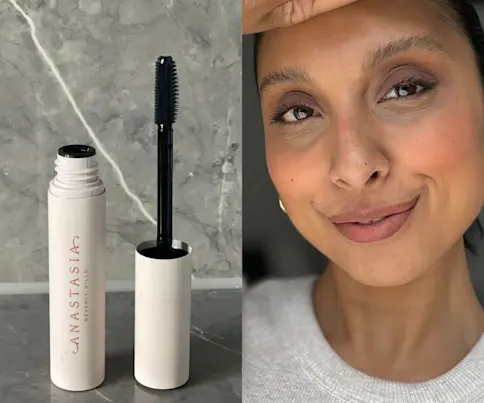
But anyway, I did it. And I was getting lots of little tips from her about, because I've got Hazel eyes. And if I wear the right eye shadows, it brings out the grain in my eyes.
Joanna Flemming:
Yes.
Hannah Furst:
What I didn't know was the purple undertones bring out the grain in your Hazel eyes. So you have like Hazel colored eyes, and you've got a little bit of grainy in there, it'll really bring out the grain. So she used an eyeshadow, which I'm about to purchase from Adore Beauty. I haven't got it yet because I want to do a whole makeup order with all the stuff that she used. It's the MAC Cosmetics eye shadow. It's those single eye shadows, like the little black round one. And it's even at the shade Swiss Chocolate. It's a matte meted, reddish brown. But it had black purple undertone to it. Does that make sense?
Joanna Flemming:
Kind of.
Hannah Furst:
You saw the video of the shadow.
Joanna Flemming:
Yeah.
Hannah Furst:
It looked purpley.
Joanna Flemming:
I think it just looks warm. Well, I don't know if I would have said purple.
Hannah Furst:
Well, the makeup artist, she's the expert, not you.
Joanna Flemming:
Exactly. Take her word for it.
Hannah Furst:
She said it had purple undertones. And now that I zoom in on it, it does have. It doesn't look purple. It looks brown. The lipstick she used was Honey. I think it was Honey Love MAC Honey Love.
Joanna Flemming:
Honey Love. That's a good one. It's a good nude.
Hannah Furst:
She did like a really '90s law where she did dark brown lip liner on the outside edges, and then used a lot of lip line. It was like this hombre. It was my favorite makeup ever.
Joanna Flemming:
Yeah, it did look really nice.
Hannah Furst:
And it was like the lashes. Oh my God. It was just-
Joanna Flemming:
Yeah. Don't you wish you could get your makeup professionally done everyday like Kim Kardashian? Sometimes I just wish you could go into glam.
Hannah Furst:
I mean, if I had to choose between like living in Thailand and getting my makeup done every day, just joking.
Joanna Flemming:
Which would you choose?
Hannah Furst:
I'd choose living in Thailand and never doing my makeup again, to be honest.
Joanna Flemming:
Oh, really?
Hannah Furst:
No, I'm just joking. I'm just joking. I like a bit of a make up. I like a special occasion for glam.
Joanna Flemming:
Yes, so do I. I wouldn't wear makeup every day, but it would be nice if someone just did it for me.
Hannah Furst:
I just love sitting there. It's like really relaxing. It's so exciting.
Joanna Flemming:
Yeah, it is relaxing.
Hannah Furst:
It's so nice.
Joanna Flemming:
I never know what I'm going to come out looking like, though, because so many makeup artists have so many different techniques. And sometimes I can just look like a completely different person.
Hannah Furst:
Well, that's what my dad said to me. I sent in a photo to the whole family and he's like, "That's not my daughter." I think he was saying complimentary, but he was like, "It doesn't even look like you." I'm like, "Well, what do I look like usually?"
Joanna Flemming:
I mean, you probably shouldn't go on a date then if you don't look like yourself. That would be considered catfishing.
Hannah Furst:
I actually was like, "You can't go on a date with that kind of makeup," because I did look like a Kardashian. I'm not trying to say that I look like a Kardashian, but the makeup was very Kardashianisk.
Joanna Flemming:
Yes. Why couldn't you go on a date like that? Just because the next time you went on a date, they'd be like, "Who are you?"
Hannah Furst:
Well, I think it would just be representing myself.
Joanna Flemming:
Yeah. Okay. Fair.
Hannah Furst:
Now, what is your product?
Joanna Flemming:
So my product is a candle. So we started stocking this brand. It's called Mason Balzac. And it is a very bougie brand. It's the kind of brand that you would find. Imagine you were in the South of France, and you walked into a lifestyle store that has homewares and stuff. This is the kind of brand that would be in there. So the candle that I've chosen is called 1642.
Joanna Flemming:
So this candle is a woody floral. So as I mentioned in our interview with Michael, I like woody fragrances. I like things to smell masculine. But this one is woody and floral at the same times. I find it really fresh. It's got notes of violet, blackberry, and cedarwood. And it says it's ... What is the vanitas painting, Hannah? Inspired by a 17th century vanitas painting.
Hannah Furst:
Vanita? A still life artwork, which includes various symbolic objects designed to remind the viewer of their mortality and worthlessness of worldly goods and pleasures.
Joanna Flemming:
Okay. That is a very existential candle, I've got to say.
Hannah Furst:
Yap.
Joanna Flemming:
That is like it'll make you feel things that you didn't know you could feel.
Hannah Furst:
I feel like that's the kind of candle that I need in my life.
Joanna Flemming:
Yeah. It's a beautiful candle. I just feel like it smells really clean and fresh. It just makes the space smell attractive is how I would put it. That's my best explanation. I don't know how to further describe it to you, but I really like it.
Hannah Furst:
Oh my God. I actually can't deal with this vanitas thing. Sorry.
Joanna Flemming:
What?
Hannah Furst:
I'm just looking on Wikipedia now. It says, "A vanita is a symbolic work of art showing the transience of life, the futility of pleasure, and the certainty of death. Often contrasting symbols of wealth and symbols of ephemerality, and death." I mean that is an intense candle.
Joanna Flemming:
Yeah, that pretty much sums it.
Hannah Furst:
So I want to make sure the candle sums up the following: transients of life, the futility of pleasure, and the certainty of death.
Joanna Flemming:
Yep. That's exactly what I was thinking. I just didn't know how to say it.
Hannah Furst:
In my words, it smells nice. That's it.
Joanna Flemming:
Interesting. I really love that. That's a cool candle.
Hannah Furst:
Yeah. Like if you had dinner parties, that is a dinner party conversation starter.
Joanna Flemming:
Yes. That's what my candle means.
Hannah Furst:
And you're like, "Well, let me tell you." And you pull out the history.
Joanna Flemming:
Excellent.
Hannah Furst:
I think the only thing that I wanted to say is that Joanna and I are both getting our first treatment's done with James [Vian 00:33:19] today.
Joanna Flemming:
Oh, I can't wait.
Hannah Furst:
So James, he was a guest of a couple of weeks ago. I wonder if he can do all my blackhead extractions for me. That's what I need.
Joanna Flemming:
If he does, can I watch?
Hannah Furst:
Yes.
Joanna Flemming:
Because we're going together as a couples experience. So if you get that done, I want to watch it.
Hannah Furst:
I'm so excited. Also, by the way, I look like a total ... What's the word?
Joanna Flemming:
She's trying to warn me that she doesn't look like herself. She's trying to prepare me. And I just think she's going to look exactly the same. I saw you two weeks ago.
Hannah Furst:
No, I've lost a bit of confidence in I. So I'll be honest. I'll be honest.
Joanna Flemming:
We're going to be fine. We'll come out of this together. It's going to be fine.
Hannah Furst:
I actually was thinking this today. I saw some people were back in podcast studios. And I was like, "I feel like maybe we'll lose it if we go back to the studio, because we'll have to relearn how to do this thing."
Joanna Flemming:
I know. And how to interact with each other in person.
Hannah Furst:
I'm going to have to look at you in the eye. And I feel like it might be really awkward. I haven't seen your face.
Joanna Flemming:
Why? Why?
Hannah Furst:
Because I haven't seen your face in so long. We're going to have to sit across from each other and connect to in person. I've just missed you calling me and us doing this remotely.
Joanna Flemming:
Yeah. I think it's going to be an adjustment. But you know what? May be adjustment happen really fast, or unraveled.
Hannah Furst:
Oh no. Oh my God.
Joanna Flemming:
So I think we can do it.
Hannah Furst:
Totally.
Joanna Flemming:
Well, we'll see. We'll see. Anyway, if the podcast doesn't come back, it's because we couldn't make a way.
Hannah Furst:
Bye.
Joanna Flemming:
Thanks everyone for joining us today. Don't forget to subscribe and tell your friends. It helps other people to discover us. And also, we really want to know what you thought about this podcast. So if you can leave us a review, that would be much appreciated.