How to Build an Age-Management Routine for Sensitive Skin

Yads Cauchi is a Dermal Clinician, Nutritionist (BHSc, MSc) and Beauty Journalist. She's also a mum of four. Evidence based skin health and nutrition are her thing and she works from her own skin clinic based in Canberra - you can find her there, or on Instagram and TikTok @yadscauchiskin.
Retinol, exfoliating acids and vitamin C? Social media can make it super tempting to think you need to have all of these ingredients in your routine. And yes, they are effective… on the right skin. However, if your skin stings at the thought of introducing one of these ingredients, or, if you've tried them before and almost damaged your face, you’ll know that not every ingredient is for everyone.
So how do you pop together an effective age management routine when you’re more of a sensitive skin? Well, let me explain.
You see, rather than try and incorporate actives your skin might only tolerate comfortably for days, the better question to ask yourself is what ingredients could your skin comfortably use consistently for months?
What does ‘sensitive skin’ mean?
First though, let’s clarify what sensitive skin means, because a true sensitive skin is skin that stings, burns, itches or tingles in response to things that wouldn’t usually cause discomfort.
There are also conditions like eczema, rosacea or contact dermatitis which can all make skin sensitive or reactive, and they need a more tailored approach. Meaning, it’s important to chat to a professional instead of trying to diagnose yourself and make things worse.
Best Skincare Routine for Sensitive Skin
Start with the foundation
However, before you add any actives into your routine, it’s important to get the basics right: a gentle cleanser, a moisturiser, and a broad-spectrum SPF50+ sunscreen are the best starting points. Plus, if we’re talking about age management concerns, sunscreen is the priority as UV exposure is a major driver of premature skin ageing. So there’s little point chasing a serum for fine lines while skipping the step that helps prevent them in the first place.
Choose one active for your main concern
Once the basics are in place, pick an ingredient based on what you actually want to improve. If we’re talking age-management concerns, SPF and retinoids will always be a top priority. However if retinoids are too much for your skin let’s go through some other ingredients that can benefit a sensitive skin.
Fine lines: peptides
Peptides are a gentle option to consider. Peptides can help boost collagen production, and keep the skin looking calm and healthy while minimising fine lines.
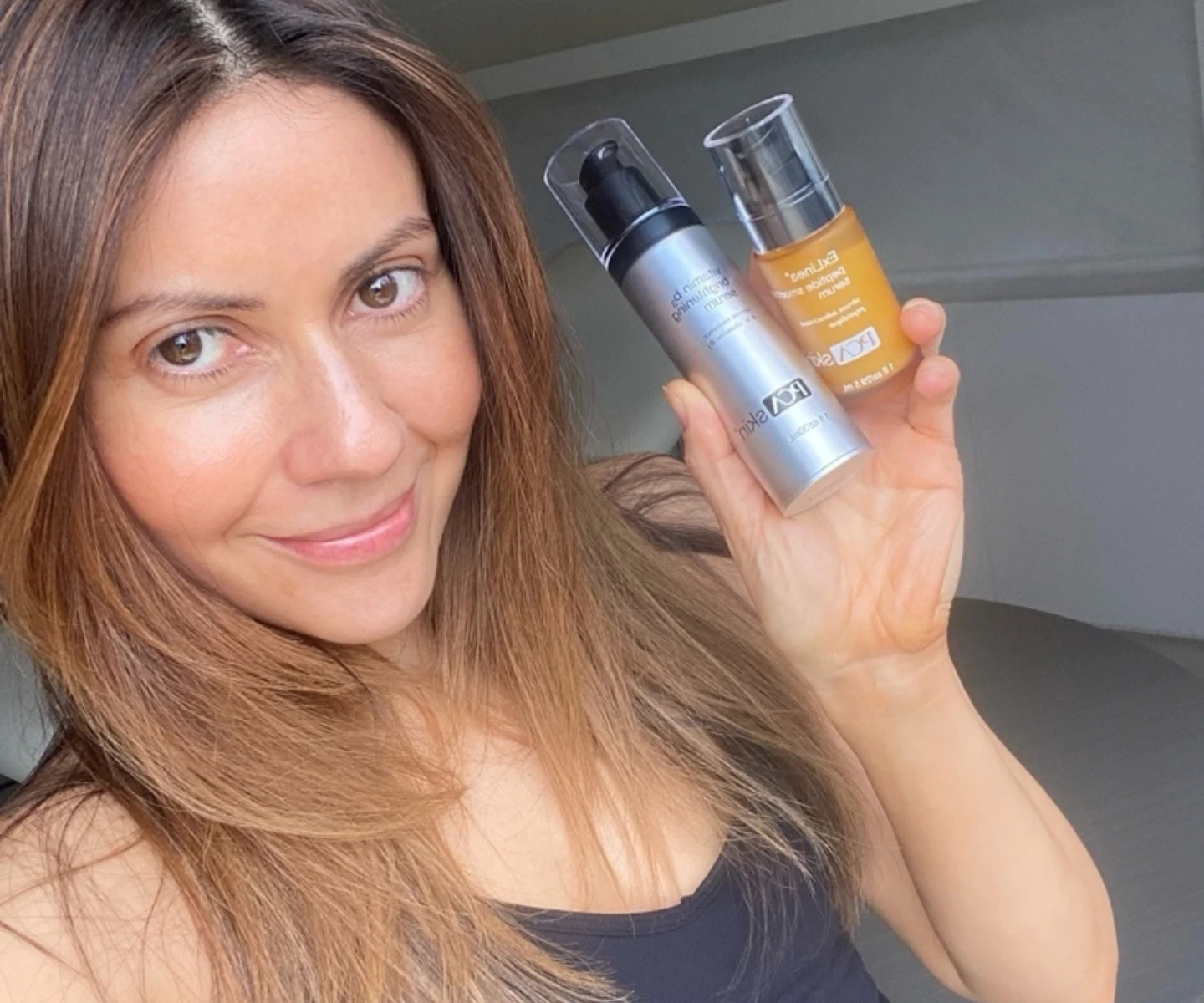
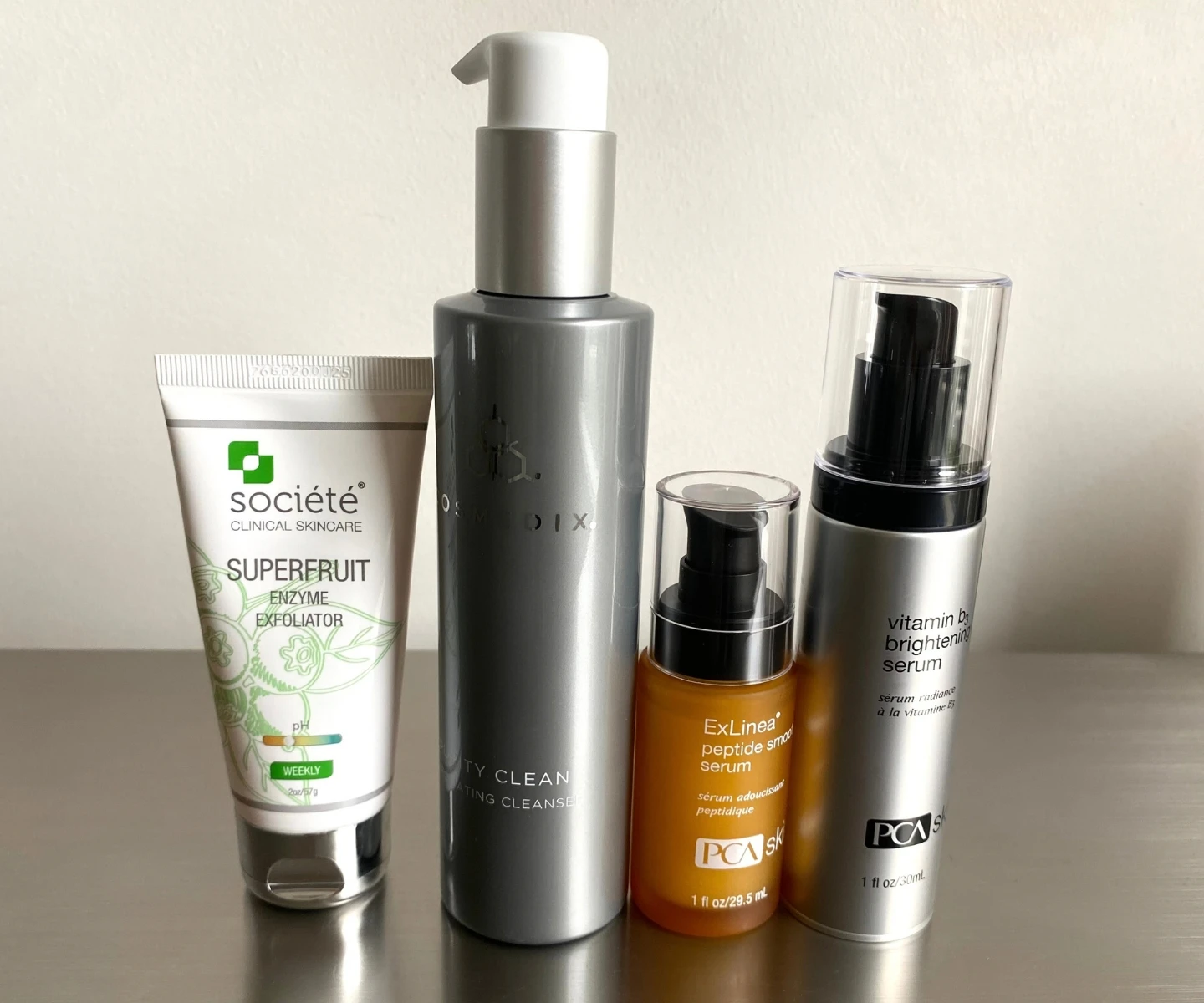
Try: PCA Skin Exlinea Peptide Smoothing Serum, this is an excellent and gentle peptide serum for ageing concerns. Can be used x2 a day.
Uneven tone, skin discolouration: Niacinamide
Niacinamide can help improve the appearance of skin discolouration while being safe and effective for a sensitive skin. I always say that uneven skin tone can make skin look older than it is, but if harsh pigmentation serums don’t seem to work, this could be a good place to start.
Try: PCA Skin Vitamin B3 Brightening Serum this is a gentle brightening serum that can help manage both skin discolouration and redness. Also suitable for use through pregnancy.
Redness, post-blemish marks: azelaic acid
Azelaic acid may help, particularly if you’re also prone to redness. Just remember that “suitable for sensitive skin” doesn’t mean it can’t sting, so when it is introduced you always need to start slowly. Read more here.
Rough texture: PHA’s and enzyme exfoliants
If rough texture is contributing to ageing skin look for a PHA or enzyme exfoliants and ease them into your routine gently. An exfoliating cleanser can also be a good way to test the waters, as it is rinsed off after a short contact time. Just remember that gentle is still exfoliation, and it’s totally ok to not exfoliate very often if your skin doesn’t love it.
Try: Cosmedix Purity Clean or Societe Superfruit Enzyme Mask both gentle exfoliating options. The mask is enzyme based and the cleanser is a gentle wash off exfoliant. Again, it might be worth a patch test.
Dryness and dehydration: glycerin and ceramides
When skin is dry or dehydrated, fine lines can look more noticeable, and even your favourite products can suddenly feel a bit stingy. This is where a good moisturiser is worth it. Look for ingredients like glycerin to help draw water into the skin, and ceramides to help support its barrier. Apply it while your skin is still slightly damp, and don’t be afraid to use a richer cream if your skin needs one.
Try: Skinceuticals Triple Lipid Restore the best of the best type of moisturiser for ageing and sensitive skin. Less is more as it really delivers.
Finally, always remember the best active isn’t the strongest one on the shelf. It’s the one your skin can tolerate well enough to actually keep using. Patch test first, then introduce one active a couple of nights a week and build up only if your skin is comfortable. A good moisturiser can help with dryness, and you can leave exfoliating acids out while you get the basics working. If you notice persistent burning, worsening redness or peeling, stop the new active and go back to your simple routine!
Catch up on more of Yad's expert advice below: